
Lighthouses
Recent Articles
More Articles
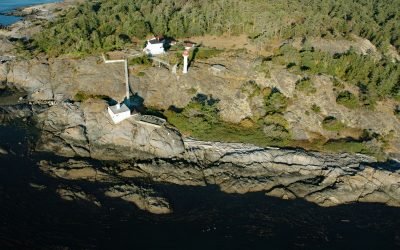
Discovery Island, Sea Bird Point
Discovery Island is part of a group of islands in Oak Bay off the southeastern tip of Vancouver Island at Sea Bird Point, about 17 miles (27 km) southeast of Sidney and 6.5 miles (10.5 km) east of downtown Victoria, British Columbia.
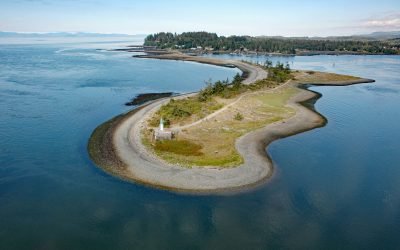
Whiffin Spit, Sooke Harbour
Whiffin Spit is a narrow sandspit that almost landlocks Sooke Harbour and Sooke Basin, about 17 miles (27 km) southwest of Victoria and 1.5 miles (2.4 km) southeast of Sooke, British Columbia.
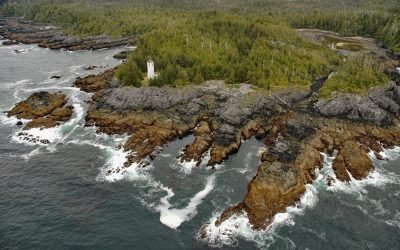
Tree Point, Revillagigedo Channel
Tree Point is the site of a historic lighthouse on the east shore of Revillagigedo Channel on the Southeast Alaska mainland, about 42 miles (68 km) northwest of Prince Rupert, and 48 miles (77 km) southeast of Ketchikan, Alaska.
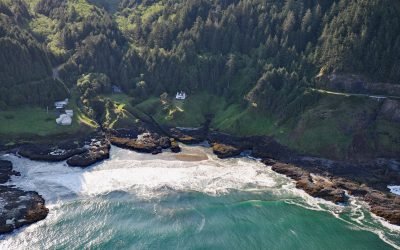
Cleft of the Rock Lighthouse, Cape Perpetua
Cleft of the Rock Light is a privately owned lighthouse located on Cape Perpetua, at the mouth of North Cape Creek, about 21 miles (34 km) north of Florence and 2 miles (3.2 km) south of Yachats, Oregon.
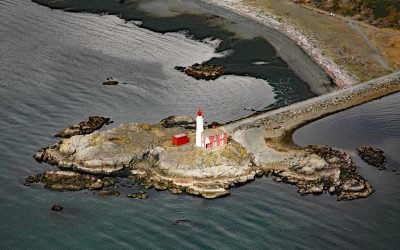
Fisgard Island, Esquimalt Harbour
Fisgard Island Light Station is located in Royal Roads off the southern shore of Vancouver Island at the entrance to Esquimalt Harbour, about 3.6 miles (5.8 km) west of Victoria and in the community of Colwood, British Columbia.
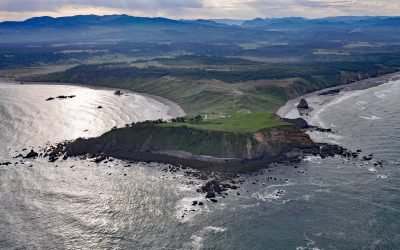
SS South Portland, Cape Blanco
SS South Portland is a historical shipwreck on Cape Blanco, a prominent headland that extends 1.5 miles (2.4 km) into the Pacific Ocean with cliffs 200 feet (61 m) high, about 205 miles (331 km) southwest of Portland and 7 miles (11 km) north-northwest of Port Orford, Oregon.
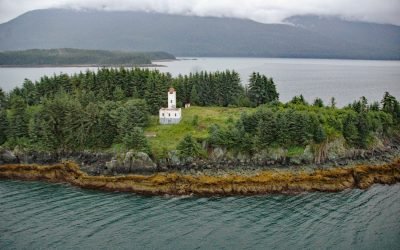
Sentinel Island, Lynn Canal
Sentinel Island is located along the eastern shore of Lynn Canal in the center of Favorite Channel near the northern entrance, about 51 miles (82 km) south-southeast of Haines and 25 miles (40 km) northwest of Juneau, Alaska.
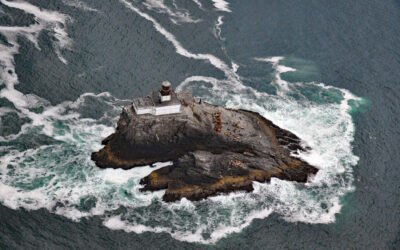
Tillamook Rock, Oregon Islands National Wildlife Refuge
Tillamook Rock is the site of a deactivated lighthouse located about 1.3 miles (2km) west of Tillamook Head in the Oregon Islands National Wildlife Refuge, about 20 miles (32 km) southwest of Astoria and 34 miles (39 km) north-northwest of Tillamook, Oregon.
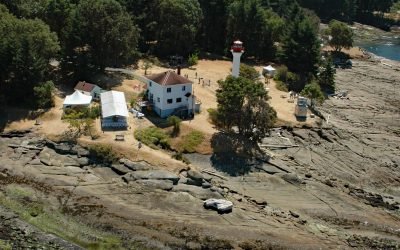
Active Pass, Gulf Islands
Active Pass is a narrow strait about 3.4 miles (5.5 km) long separating Mayne Island from Galiano Island in the southern Gulf Islands, about 16.4 miles (26.5 km) north-northeast of Sidney and 12.5 miles (20 km) southwest of Tsawwassen, British Columbia.
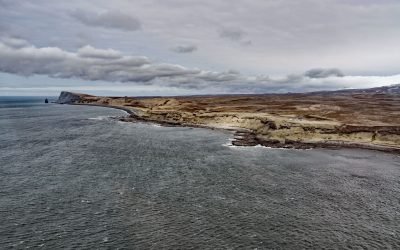
Scotch Cap Light, Unimak Pass
Scotch Cap Light is located on the southwest corner of Unimak Island, and the eastern shore of Unimak Pass, about 714 miles (1151 km) southwest of Anchorage and 81 miles (131 km) northeast of Dutch Harbor, Alaska.
About the background graphic
This ‘warming stripe’ graphic is a visual representation of the change in global temperature from 1850 (top) to 2019 (bottom). Each stripe represents the average global temperature for one year. The average temperature from 1971-2000 is set as the boundary between blue and red. The colour scale goes from -0.7°C to +0.7°C. The data are from the UK Met Office HadCRUT4.6 dataset.
Click here for more information about the #warmingstripes.