Beaches
Recent Articles
More Articles
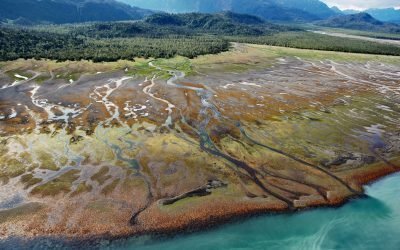
Humpy Creek, Kachemak Bay
Humpy Creek drains a watershed of 6,912 acres (2,797 ha) and flows generally northwest for about 4.5 miles (7 km) from Emerald Lake at an elevation of 1,138 feet (347 m) in the Kenai Mountains to the southeastern shore of Kachemak Bay, about 67 miles (108 km) southwest of Seward and 14 miles (22.5 km) east-northeast of Homer, Alaska.
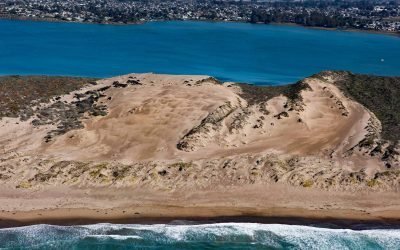
Morro Dunes, Los Osos
Morro Dunes form a barrier spit separating Morro Bay to the east from the Pacific Ocean to the west, about 6 miles (10 km) south-southwest of the community of Morro Bay and 2 miles (3.2 km) west of Los Osos, California.
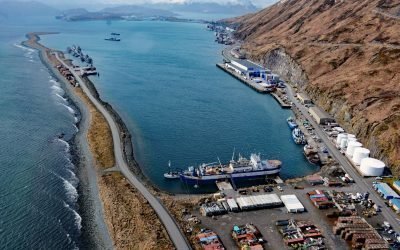
Dutch Harbor, Amaknak Island
Dutch Harbor is an anchorage and fish processing facility on the east coast of Amaknak Island, bordered by Mount Ballyhoo to the west and a gravel spit to the east that forms the natural harbor, about 33 miles (53 km) southwest of Akutan and 3 miles (5 km) north-northeast of Unalaska, Alaska.
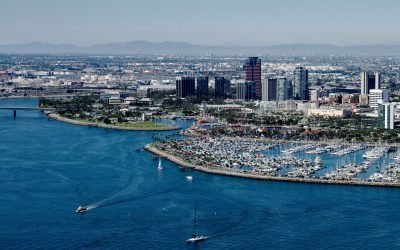
Los Angeles River, Long Beach
Los Angeles River starts at the confluence of Bell Creek and Arroyo Calabasas that drain from the Simi Hills and Santa Monica Mountains respectively, and flows generally southeast for 30 miles (48 km) through the San Fernando Valley and downtown Los Angeles and then south for 20 miles (32 km) to San Pedro Bay at Long Beach, California.
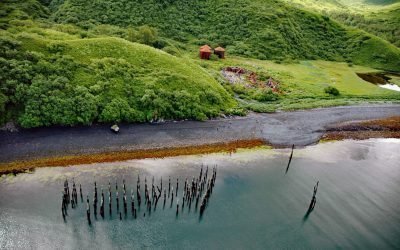
Port Hobron, Sitkalidak Island
Port Hobron is an abandoned whaling station on the south shore of a fjord with the same name situated on the north coast of Sitkalidak Island, about 6 miles (10 km) southeast of Old Harbor and 48 miles (77 km) south-southwest of Kodiak, Alaska.
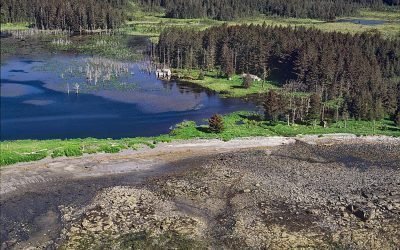
Afognak Village, Marmot Bay
Afognak, located at the head of Marmot Bay on the southeast coast of Afognak Island in the Kodiak Archipelago, is a historic village abandoned after the 1964 tsunami, about 122 miles (196 km) south-southwest of Homer and 20 miles (32 km) northwest of Kodiak, Alaska. Read more here: https://coastview.org/2025/04/28/afognak-village-afognak-strait/
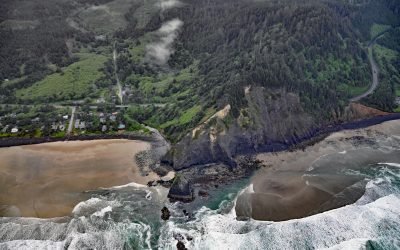
Arch Cape Creek, Arch Cape
Arch Cape is a small community at the mouth of Arch Cape Creek named after a natural sea arch in a basalt headland, about 25 miles (40 km) north-northwest of Tillamook and 6.5 miles (10 km) south of Cannon Beach, Oregon.
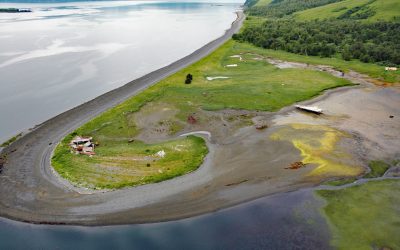
Shearwater Bay Cannery, Observation Point
Kadiak Fisheries operated a remote salmon cannery at Observation Point from 1926 until 1964 when it was destroyed by a tsunami, on the north shore of Shearwater Bay on Kodiak Island, about 36 miles (58 km) south-southwest of Kodiak and 18 miles (29 km) northeast of Old Harbor, Alaska.
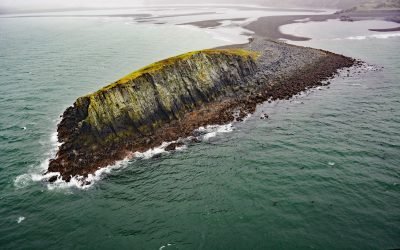
Ark Island, Aniakchak River
Ark Island is situated at the mouth of the Aniakchak River on the north shore of Aniakchak Bay and on the southeastern coast of the Alaska Peninsula, about 205 miles (330 km) southwest of Kodiak and 47 miles (75 km) northeast of Chignik, Alaska.
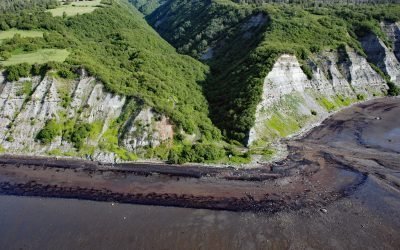
McNeil Canyon, Kachemak Bay
McNeil Canyon is on the Kenai Peninsula and the northern shore of Kachemak Bay and trends south for about 2 miles (3.2 km) following the lower course of McNeil Creek, about 57 miles (92 km) south of Kenai and 12 miles (19 km) northeast of Homer, Alaska.
About the background graphic
This ‘warming stripe’ graphic is a visual representation of the change in global temperature from 1850 (top) to 2019 (bottom). Each stripe represents the average global temperature for one year. The average temperature from 1971-2000 is set as the boundary between blue and red. The colour scale goes from -0.7°C to +0.7°C. The data are from the UK Met Office HadCRUT4.6 dataset.
Click here for more information about the #warmingstripes.