Beaches
Recent Articles
More Articles
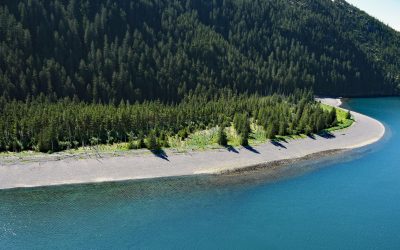
Verdant Cove, Kenai Fjords National Park
Verdant Cove is on the western shore of Aialik Bay in Kenai Fjords National Park at the northern entrance to Dora Passage, about 64 miles (103 km) east of Homer and 30 miles (48 km) south-southwest of Seward, Alaska.
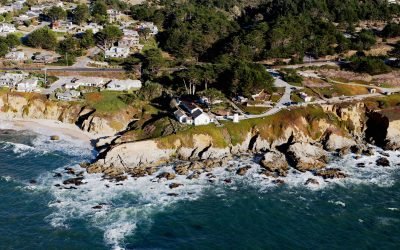
Point Montara Lighthouse, Montara
Point Montara Lighthouse is located in the coastal community of Montara, about 18 miles (29 km) south-southwest of San Francisco and 7 miles (11 km) northwest of Half Moon Bay, California.
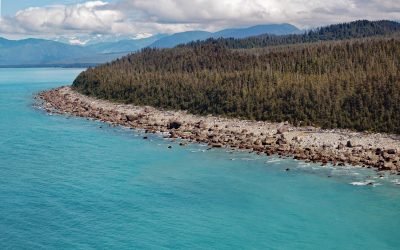
Cape Fairweather, Glacier Bay National Park and Preserve
Cape Fairweather is a point of land created by an ancient terminal moraine at the base of the Fairweather Glacier in Glacier Bay National Park and Preserve, about 131 miles (211 km) west-northwest of Juneau and 82 miles (132 km) southeast of Yakutat, Alaska.
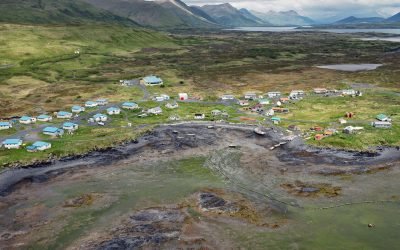
Akhiok, Kodiak Island
Akhiok is the southernmost Alutiiq Sugpiat village on Kodiak Island, situated on Akhiok Bay which is on the western shore of Alitak Bay, about 167 miles (269 km) east-northeast of Chignik and 87 miles (140 km) southwest of Kodiak, Alaska.
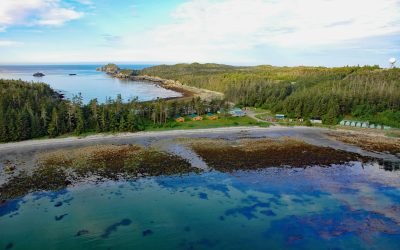
Symonds Bay, Biorka Island
Symonds Bay is on the north coast of Biorka Island, between Hanus Point to the east and Entrance Islet to the west, and extends about 0.9 miles (1.4 km) south to a gravel isthmus with a beach landing, about 184 miles (296 km) northwest of Ketchikan and 16 miles (26 km) south-southwest of Sitka, Alaska.
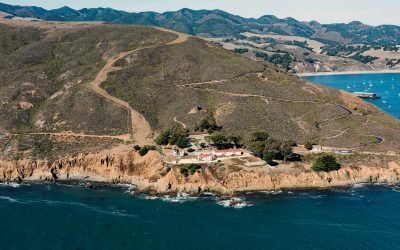
Point San Luis Light Station, Avila Beach
Point San Luis is the site of a historic light station on a peninsula formed by San Luis Hill, a headland with an elevation of 708 feet (216 m), that provides a sheltered harbor for Port San Luis and the community of Avila Beach on San Luis Obispo Bay, about 118 miles (190 km) south-southeast of Monterey and 7 miles (11 km) west-northwest of Pismo Beach, California.
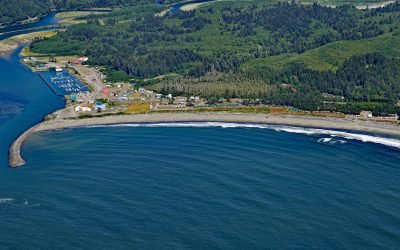
La Push, Quillayute River
La Push is the traditional community of the Quileute people situated at the mouth of the Quillayute River within the Quileute Indian Reservation and surrounded by the coastal strip of Olympic National Park, about 32 miles (51 km) south of Neah Bay and 12 miles (19 km) west-southwest of Forks, Washington.
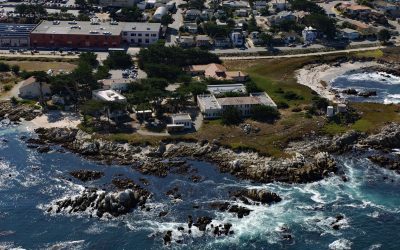
Hopkins Marine Station, Point Cabrillo
Hopkins Marine Station is a laboratory of Stanford University located on Point Cabrillo in Monterey Bay and adjacent to the Monterey Bay Aquarium in Pacific Grove, about 14 miles (23 km) south-southwest of Moss Landing and 1.5 miles (2.4 km) north-northwest of Monterey, California.
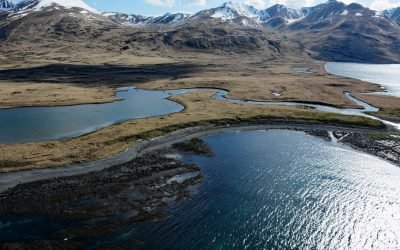
Kashega, Unalaska Island
Kashega is an abandoned Unangan Aleut village on the Bering Sea coast of Unalaska Island, situated on a spit between Brennan Lake and Kashega Bay, about 79 miles (127 km) northeast of Nikolski and 39 miles (63 km) southwest of Dutch Harbor, Alaska.
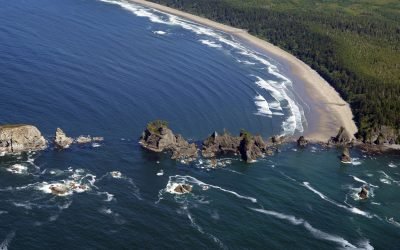
Point of Arches, Olympic National Park
Point of Arches and the adjacent Shi Shi Beach represent a unique section of shoreline located at the edge of the Olympic National Park.
About the background graphic
This ‘warming stripe’ graphic is a visual representation of the change in global temperature from 1850 (top) to 2019 (bottom). Each stripe represents the average global temperature for one year. The average temperature from 1971-2000 is set as the boundary between blue and red. The colour scale goes from -0.7°C to +0.7°C. The data are from the UK Met Office HadCRUT4.6 dataset.
Click here for more information about the #warmingstripes.