
Beaches
Recent Articles
More Articles
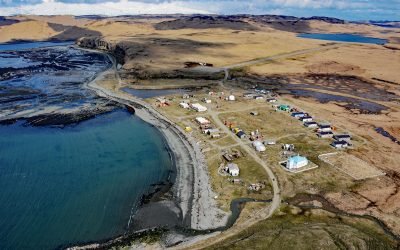
Nikolski, Umnak Island
Nikolski is a community located near the southwest end of Umnak Island, one of the Fox Islands in the eastern Aleutian Islands, about 910 miles (1,468 km) southwest of Anchorage and 116 miles (187 km) southwest of Dutch Harbor, Alaska.

Klamath River, Requa
Klamath River flows for 257 miles (415 km) from a broad patchwork of lakes and marshes at the edge of the Oregon high desert, through the Cascade Range and the Klamath Mountains, and enters the Pacific Ocean at the community of Requa, about 52 miles (84 km) north of Eureka and 16 miles (26 km) south-southeast of Crescent City, California.
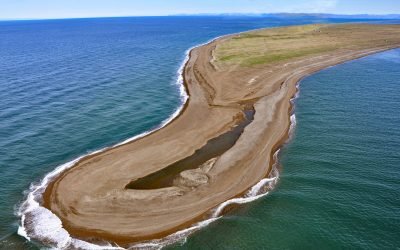
Tigara Peninsula, Chukchi Sea
Tigara Peninsula is a prominent point of land extending west for 13 miles (21 km) from the mouth of the Kukpuk River on the Cape Lisburne peninsula into the Chukchi Sea, about 320 miles (516 km) southwest of Utqiaġvik and 151 miles (244 km) northwest of Kotzebue, Alaska.
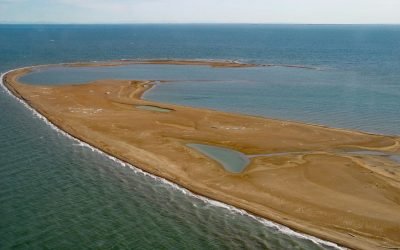
Reindeer Island, Stefansson Sound
Reindeer Island is about 2 miles (3.2 km) long and is the westernmost of the six Midway Islands in Stefansson Sound on the Beaufort Sea coast, about 196 miles (316 km) southeast of Utqiaġvik and 21 miles (34 km) north of Deadhorse, Alaska.
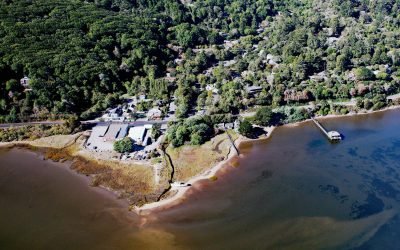
Inverness, Tomales Bay
Inverness is a community on the southwest shore of Tomales Bay, about 19 miles (14.5 km) southeast of Bodega Bay and 3.5 miles (5.6 km) northwest of Point Reyes Station, California.
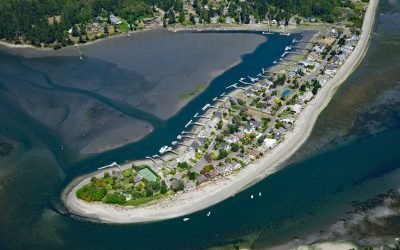
Indianola, Miller Bay
Indianola is located on the north shore of Port Madison and east shore of Miller Bay on the Port Madison Indian Reservation, about 14 miles (23 km) northwest of Seattle and 4.6 miles (7.4 km) east of Poulsbo, Washington.
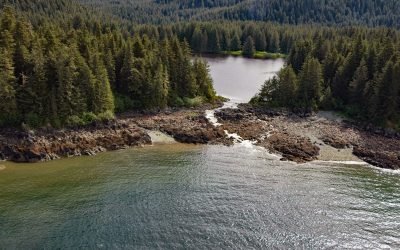
Peterson Lagoon, Eagle Harbor
Peterson Lagoon is the estuary of Peterson Creek that starts from the outlet of Peterson Lake at an elevation of 734 feet (224 m) on Auke Mountain and flows north-northwest for 4 miles (7 km) to the lagoon that connects to Eagle Harbor, about 56 miles (90 km) south-southeast of Haines and 19 miles (31 km) northwest of Juneau, Alaska.
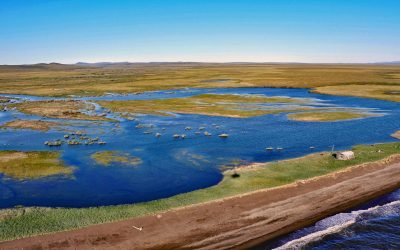
Rabbit Creek, Imik Lagoon
Rabbit Creek starts in the Mulgrave Hills and flows southwest for 23 miles (37 km) through the File Mountains, also known as the Tahinichok Mountains, to the Chukchi Sea at the southern end of Imik Lagoon in Cape Krusenstern National Monument, about 96 miles (155 km) southeast of Point Hope and 53 miles (85 km) northwest of Kotzebue, Alaska.
About the background graphic
This ‘warming stripe’ graphic is a visual representation of the change in global temperature from 1850 (top) to 2019 (bottom). Each stripe represents the average global temperature for one year. The average temperature from 1971-2000 is set as the boundary between blue and red. The colour scale goes from -0.7°C to +0.7°C. The data are from the UK Met Office HadCRUT4.6 dataset.
Click here for more information about the #warmingstripes.