
Canneries
Recent Articles
More Articles
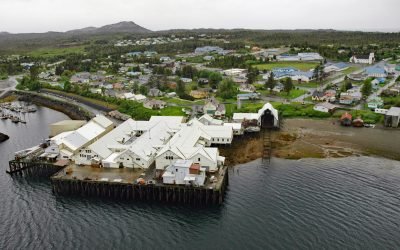
Metlakatla, Annette Island
Metlakatla is a Tsimshian community situated on Port Chester, an embayment on the west coast of Annette Island, about 75 miles (121 km) northwest of Prince Rupert and 16 miles (26 km) south-southeast of Ketchikan, Alaska.
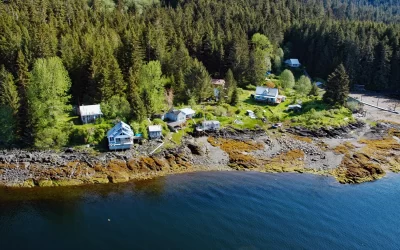
Loring, Naha Bay
Loring is a small community at the site of a historical salmon cannery on the west coast of Revillagigedo Island, at the head of Naha Bay and near the mouth of the Naha River, about 66 miles (106 km) south-southeast of Wrangell and 17 miles (27 km) north of Ketchikan, Alaska.
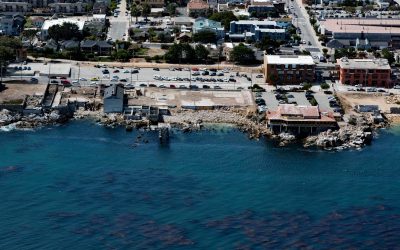
Cannery Row, Monterey
Cannery Row is the Monterey waterfront between San Carlos Beach and Cabrillo Beach, or between the Monterey Harbor Marina and the Monterey Bay Aquarium, where several historical Pacific sardine canneries once operated, about 25 miles (40 km) south-southeast of Santa Cruz and 1 mile (1.6 km) southeast of Pacific Grove, California.
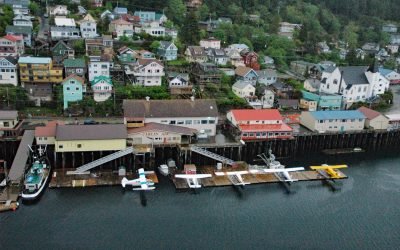
Ketchikan, Revillagigedo Island
Ketchikan is a coastal community and U.S. port of entry on the north shore of Tongass Narrows, on the southern coast of Revillagigedo Island, about 88 miles (142 km) northwest of Prince Rupert and 84 miles (135 km) south-southeast of Wrangell, Alaska.

Big Port Walter, Baranof Island
Port Walter is a fjord 3.7 miles (6 km) long that opens into Chatham Strait on the southeast coast of Baranof Island, about 91 miles (146 km) west of Wrangell and 51 miles (82 km) south-southeast of Sitka, Alaska.
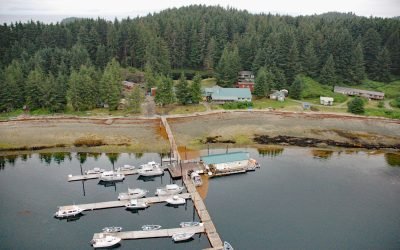
Whalers Cove, Killisnoo Island
Whalers Cove is a bight on the northeastern shore of Killisnoo Island located in Chatham Strait along the central west coast of Admiralty Island in the Alexander Archipelago of Southeast Alaska, about 42 miles (68 km) northeast of Sitka and 2.5 miles (4 km) south of Angoon, Alaska.
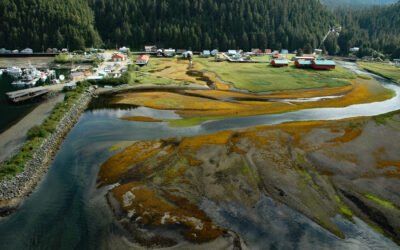
Pelican, Lisianski Inlet
Pelican is a small community located on the east side of Lisianski Inlet on the north coast of Chichagof Island in the Alexander Archipelago of Southeast Alaska, about 71 miles (114 km) north-northwest of Sitka and 17 miles (27 km) south of Elfin Cove, Alaska.
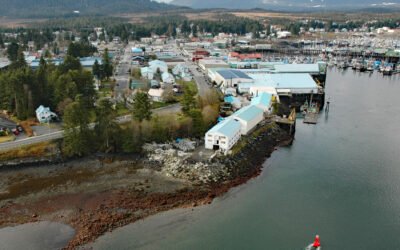
Petersburg, Mitkof Island
Petersburg is a community on the north end of Mitkof Island where the northern entrance to Wrangell Narrows meets Frederick Sound, about 116 miles (187 km) southeast of Juneau and 32 miles (52 km) northwest of Wrangell, Alaska.
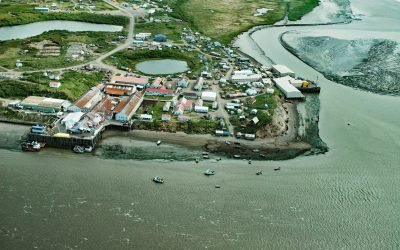
Egegik, Bristol Bay
Egegik is a small Yup’ik village on the south bank of Egegik Bay on the eastern shore of Bristol Bay, about 69 miles (111 km) southeast of Dillingham and 37 miles (60 km) south-southwest of Naknek, Alaska.
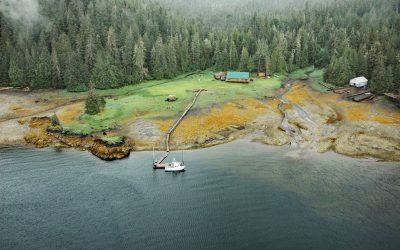
Saltery Cove, Skowl Arm
Saltery Cove is an embayment that extends southeast for 1.5 miles (2.4 km) off Skowl Arm on the east coast of Prince of Wales Island, about 26 miles (42 km) west of Ketchikan and 10 miles (16 km) south-southeast of the Organized Village of Kasaan, Alaska.
About the background graphic
This ‘warming stripe’ graphic is a visual representation of the change in global temperature from 1850 (top) to 2019 (bottom). Each stripe represents the average global temperature for one year. The average temperature from 1971-2000 is set as the boundary between blue and red. The colour scale goes from -0.7°C to +0.7°C. The data are from the UK Met Office HadCRUT4.6 dataset.
Click here for more information about the #warmingstripes.