
Communities
Recent Articles
More Articles
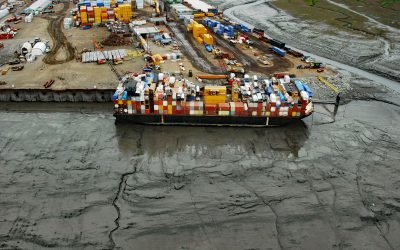
Ship Creek, Knik Arm
Ship Creek flows generally northwest for about 28 miles (45 km) from the Chugach Mountains to Knik Arm, about 22 miles (35 km) southwest of the village of Knik and 0.5 miles (0.8 km north of downtown Anchorage, Alaska.
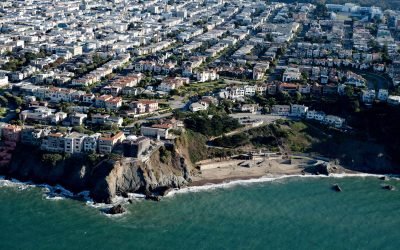
China Beach, San Francisco
China Beach is a small sandy cove on the South Bay of the Golden Gate tucked between Lands End and Baker Beach, once used as a campsite by Chinese fishermen, about 7 miles (11 km) north of Daly City and 5 miles (8 km) west of downtown San Francisco, California.
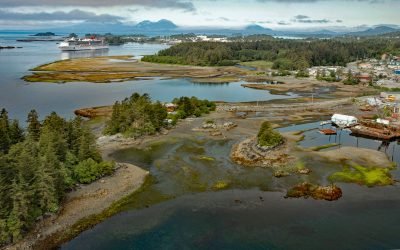
Sitka, Baranof Island
Sitka is a community situated on Sitka Sound on the west coast of Baranof Island, about 185 miles (298 km) northwest of Ketchikan and 95 miles (153 km) southwest of Juneau, Alaska.

Soquel Creek, Capitola
Soquel Creek runs through Capitola, a community adjacent to Santa Cruz on the north coast of Monterey Bay, about 75 miles (120 km) south of San Francisco and 26 miles (42 km) north of Monterey, California.
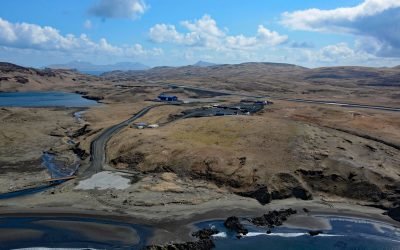
Akutan Airport, Akun Island
Akutan Airport is a State of Alaska owned public-use airport on Akun Island that serves the community of Akutan which is 6 miles (10 km) west-southwest across Akutan Bay on Akutan Island, about 766 miles (1,235 km) southwest of Anchorage and 44 miles (71 km) northeast of Dutch Harbor, Alaska.
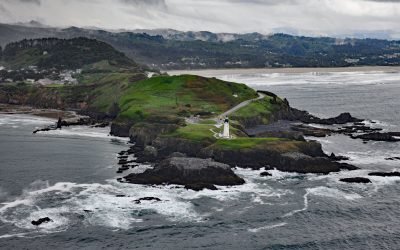
Yaquina Head, Agate Beach
Yaquina Head is a prominent basalt headland, adjacent to the community of Agate Beach, rising over 100 feet (30 m) in elevation and extending 0.75 miles (1.2 km) into the Pacific Ocean, about 9 miles (15 km) south of Depoe Bay and 3 miles (5 km) north-northwest of Newport, Oregon.
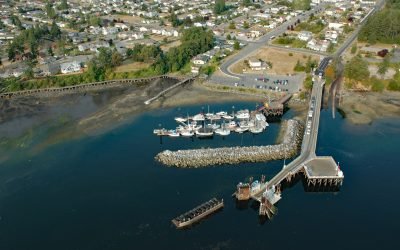
Crofton, Vancouver Island
Crofton is a small coastal community at Osborne Bay on the southeast coast of Vancouver Island, about 34 miles (55 km) north-northwest of Victoria and 26 miles (42 km) southeast of Nanaimo, British Columbia.
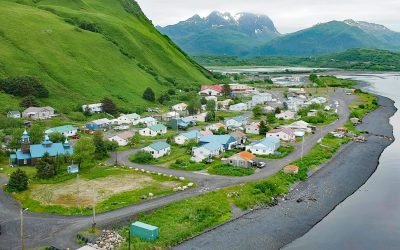
Old Harbor, Kodiak Island
Old Harbor is a small Alutiiq community situated on the western shore of Sitkalidak Strait that separates Sitkalidak Island from Kodiak Island, about 48 miles (77 km) southwest of Kodiak and 40 miles (64 km) northeast of Akhiok, Alaska.
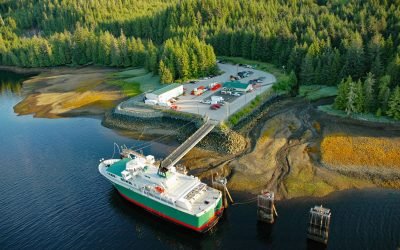
Hollis, Prince of Wales Island
Hollis is a small community on Twelvemile Arm of Kasaan Bay, north of Cat Island, near the center of Prince of Wales Island in the Alexander Archipelago of Southeast Alaska, about 41 miles (66 km) west-northwest of Ketchikan and 20 miles (32 km) east of Craig, Alaska.
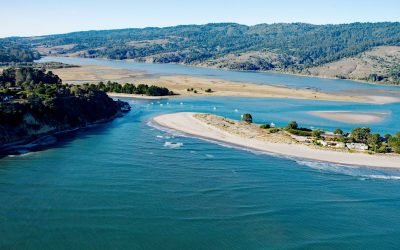
Bolinas Lagoon, Bolinas Bay
Bolinas Lagoon is a tidal estuary situated between the communities of Bolinas to the west and Stinson Beach to the east, about 35 miles (56 km) south-southeast of Bodega Bay and 17 miles (27 km) northwest of San Francisco, California.
About the background graphic
This ‘warming stripe’ graphic is a visual representation of the change in global temperature from 1850 (top) to 2019 (bottom). Each stripe represents the average global temperature for one year. The average temperature from 1971-2000 is set as the boundary between blue and red. The colour scale goes from -0.7°C to +0.7°C. The data are from the UK Met Office HadCRUT4.6 dataset.
Click here for more information about the #warmingstripes.