
Historical Sites
Recent Articles
More Articles

Anacortes Ferry Terminal, Guemes Channel
Anacortes ferry terminal is located at Ship Harbor, an embayment on the northwestern shore of Fidalgo Island and the southern shore of Guemes Channel, about 85 miles (137 km) north of Seattle and 3.7 miles (6 km) west of the community of Anacortes, Washington.
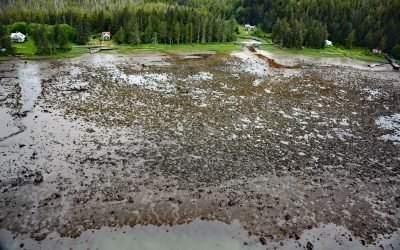
Osland, Smith Island
Osland was once an active fishing and boatbuilding community on the east coast of Smith Island at the mouth of the Skeena River, about 68 miles (109 km) southwest of Terrace and 14 miles (23 km) south-southeast of Prince Rupert, British Columbia.
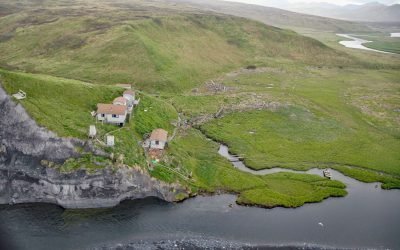
Ayakulik River, Kodiak Island
The Ayakulik River flows generally south for 30 miles (48 km) to the Shelikof Strait coast of Kodiak Island, about 89 miles (143 km) southwest of Kodiak and 22 miles (35 km) northwest of Akhiok, Alaska.
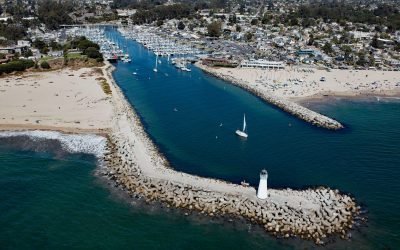
Walton Lighthouse, Santa Cruz Harbor
Walton Lighthouse is situated on the west jetty at the entrance to the Santa Cruz harbor adjacent to Seabright State Beach, about 25 miles (40 km) north-northwest of Monterey and in the city of Santa Cruz, California.
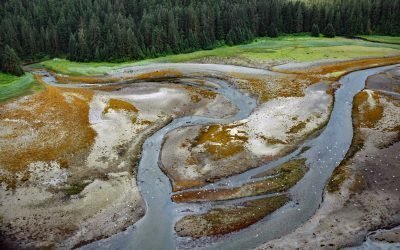
Sumdum Mine, Sanford Cove
Sumdum is a historical mine and community located at the head of Sanford Cove, an embayment on the southern shore of Endicott Arm, about 64 miles (103 km) north-northwest of Petersburg and 55 miles (89 km) southeast of Juneau, Alaska.
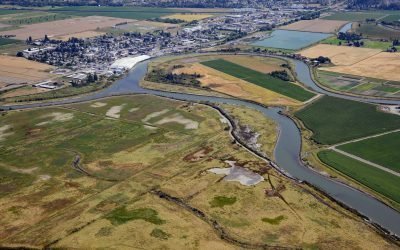
Leque Island, South Pass Stillaguamish River
Leque Island is located at the mouth of the Stillaguamish River on South Pass channel that separates Camano Island from the mainland, about 43 miles (69 km) north of Seattle and 0.6 miles (1 km) southwest of Stanwood, Washington.
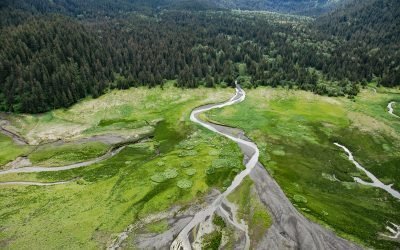
Sadie River, Kachemak Bay
Sadie River starts on the western flank of the Kenai Mountains at an elevation of about 3,200 feet (975 m) and flows generally west-northwest for 6 miles (10 km) through Kachemak Bay State Park to the head of Sadie Cove, about 14.5 miles (23 km) south-southeast of Homer and 13 miles (20 km) east-northeast of Seldovia, Alaska.

Carlisle Cannery, Skeena River
Carlisle is a historical remote salmon cannery on the east bank at the mouth of the Skeena River, about 66 miles (106 km) southwest of Terrace and 17 miles (27 km) southeast of Prince Rupert, British Columbia.
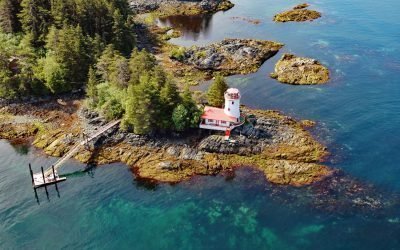
Sitka Lighthouse, Galankin Islands
Sitka Lighthouse is privately owned and located at the northwestern end of Galankin Island in Sitka Sound between the Beardslee Islands to the west and Ball Islets to the east, about 43 miles (69 km) southwest of Angoon and 1 mile (1.6 km) south-southwest of Sitka, Alaska.

Cape Elizabeth, Chugach Islands
Cape Elizabeth forms the western shore of Elizabeth Island and is located on the north side of Kennedy Entrance, about 96 miles (155 km) north-northeast of Kodiak and 36 miles (58 km) south-southwest of Homer, Alaska.
About the background graphic
This ‘warming stripe’ graphic is a visual representation of the change in global temperature from 1850 (top) to 2019 (bottom). Each stripe represents the average global temperature for one year. The average temperature from 1971-2000 is set as the boundary between blue and red. The colour scale goes from -0.7°C to +0.7°C. The data are from the UK Met Office HadCRUT4.6 dataset.
Click here for more information about the #warmingstripes.