
Historical Sites
Recent Articles
More Articles
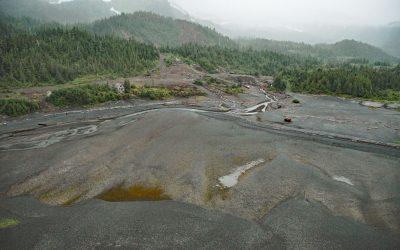
Beatson Copper Mine, Latouche Island
Beatson Copper Mine and the abandoned mining community of Latouche are situated at the base of Mount Beatson and adjacent to Powder Point near the northwest tip of Latouche Island in Prince William Sound, about 82 miles (132 km) southwest of Cordova and 57 miles (92 km) southeast of Whittier, Alaska.
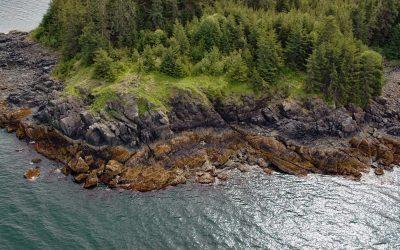
Point Lena, Favorite Channel
Point Lena is located on Favorite Channel, between Point Stephens to the north and Point Louisa to the south, and is the site of an infamous historical shipwreck and the present-day Ted Stevens Marine Research Institute, about 63 miles (102 km) south-southeast of Haines and 14 miles (23 km) northwest of Juneau, Alaska.
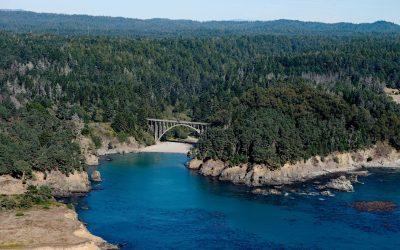
Russian Gulch, Mendocino Coast
Russian Gulch is a river that starts at an elevation of about 800 feet (244 m) on the northwestern flank of Hi Chute Ridge in the California Coast Ranges and flows generally northwest for 5 miles (8 km) to the Pacific Ocean, draining a watershed of 2,456 acres (994 ha) in Russian Gulch State Park, about 2 miles (3.3 km) north of Mendocino and 7 miles (11 km) south of Fort Bragg, California.
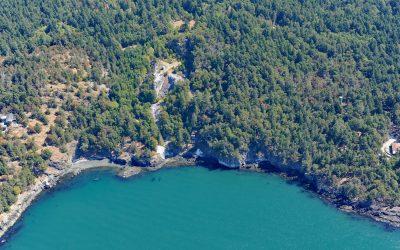
Lime Kiln Point, San Juan Island
Lime Kiln Point is a state park of 42 acres (17 ha) and the site of a historic limestone quarry and kiln on the western shore of San Juan Island, about 6 miles (10 km) south of Roche Harbor and 6 miles (10 km) west of Friday Harbor, Washington.
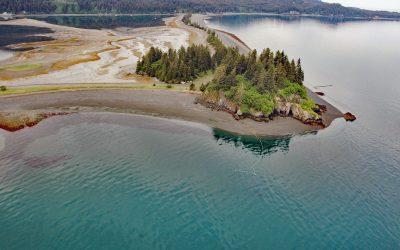
Nubble Point, Kasitsna Bay
Nubble Point is a bedrock outcrop connected to the Kenai Peninsula mainland by MacDonald Spit which forms and separates Kasitsna Bay from Kachemak Bay, about 11 miles (18 km) south of Homer and 6.5 miles (10.5 km) northeast of Seldovia, Alaska.
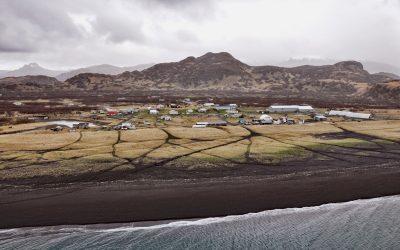
Perryville, Alaska Peninsula
Perryville is an Alutiiq Sugpiaq community established on the south coast of the Alaska Peninsula between Three Star Point to the west and Coal Cape to the east, about 66 miles (106 km) northeast of Sand Point and 41 miles (66 km) southwest of Chignik, Alaska.
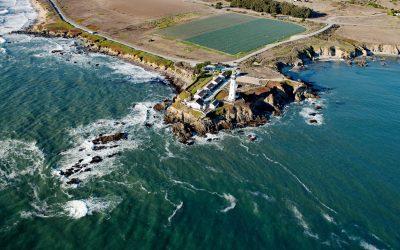
Pigeon Point Lighthouse, Pigeon Point
Pigeon Point is a prominent headland and the site of a historic lighthouse, situated between Bolsa Point to the north and Franklin Point to the south, about 25 miles (40 km) northwest of Santa Cruz and 5 miles (8 km) south of Pescadero, California.
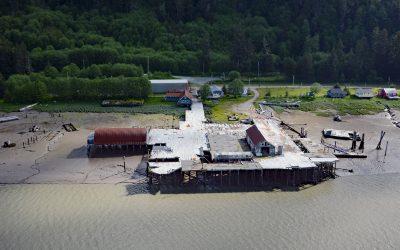
Cassiar Cannery, Skeena River
Cassiar is a historic salmon cannery situated on the northern shoreline of Inverness Passage at the mouth of the Skeena River, about 67 miles (18 km) southwest of Terrace and 11 miles (18 km) southeast of Prince Rupert, British Columbia.
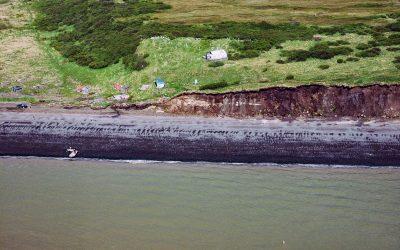
Saint Nicholas Chapel, Ekuk
Saint Nicholas Chapel is a historic Russian Orthodox church situated on a bluff overlooking Ekuk Spit and the summer set-net community of Ekuk, on the eastern shore of Nushagak Bay, about 16 miles (26 km) south-southwest of Dillingham and 2 miles (3.2 km) south-southwest of Clarks Point, Alaska.
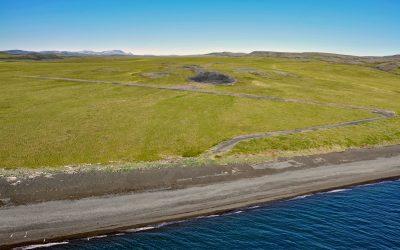
Chariot, Cape Thompson
Cape Thompson is a headland on the Chukchi Sea coast near the site of Project Chariot, about 41 miles (66 km) northwest of Kivalina and about 31 miles (50 km) southeast of Point Hope, Alaska.
About the background graphic
This ‘warming stripe’ graphic is a visual representation of the change in global temperature from 1850 (top) to 2019 (bottom). Each stripe represents the average global temperature for one year. The average temperature from 1971-2000 is set as the boundary between blue and red. The colour scale goes from -0.7°C to +0.7°C. The data are from the UK Met Office HadCRUT4.6 dataset.
Click here for more information about the #warmingstripes.