
Historical Sites
Recent Articles
More Articles

Brentwood Bay, Saanich Inlet
Brentwood Bay is a community within the municipality of Central Saanich on the eastern shore of Saanich Inlet, about 11 miles (18 km) north-northwest of the city of Victoria and 6 miles (10 km) south-southwest of Sidney, British Columbia.
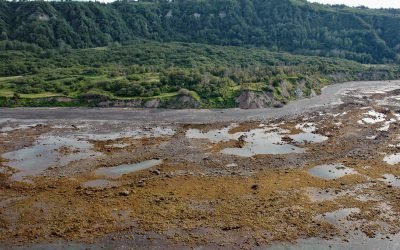
Bluff Point, Kachemak Bay
Bluff Point is a prominent headland near the north shore entrance to Kachemak Bay with an elevation ranging from approximately 300 to 700 feet (100 to 215 m), about 12 miles (19 km) southeast of Anchor Point and 4 miles (6 km) west of Homer, Alaska.
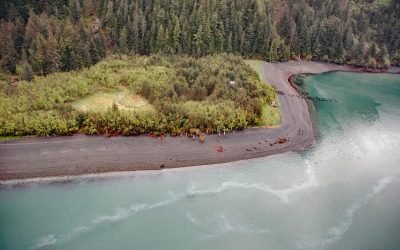
Shepard Point, Orca Inlet
Shepard Point is an alluvial fan on the eastern shore of Orca Inlet in Prince William Sound at Nelson Bay, which is an estuary mostly formed by the Rude River, about 41 miles (66 km) southeast of Valdez and 7 miles (11.3 km) north-northeast of Cordova, Alaska.
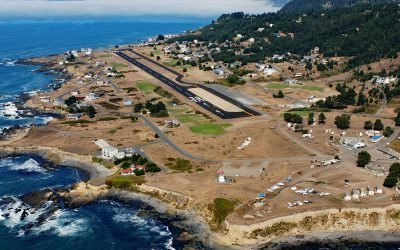
Shelter Cove, Point Delgada
Shelter Cove is an isolated community on Point Delgada on the Lost Coast between Deadman Gulch to the south and Telegraph Creek to the north, about 54 miles (87 km) south of Eureka and 43 miles (69 km) north-northwest of Fort Bragg, California.
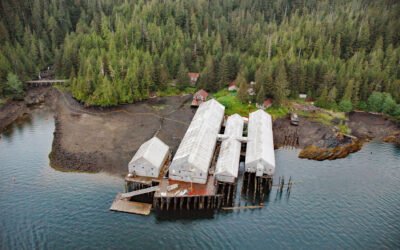
George Inlet, Revillagigedo Island
George Inlet is a deglaciated fjord that extends generally north into Revillagigedo Island for about 19 miles (31 km) from Revillagigedo Channel to Salt Lagoon, with a historical cannery situated on the western shore, about 87 miles (140 km) northwest of Prince Rupert and 9 miles (15 km) east-northeast of Ketchikan, Alaska.
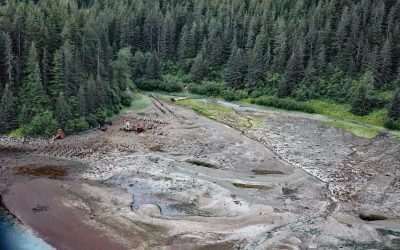
Dundas Bay, Glacier Bay National Park and Preserve
Dundas Bay is located on the north shore of Icy Strait in Glacier Bay National Park and Preserve, about 24 miles (39 km) west of Gustavus and 11 miles (18 km) north of Elfin Cove, Alaska.
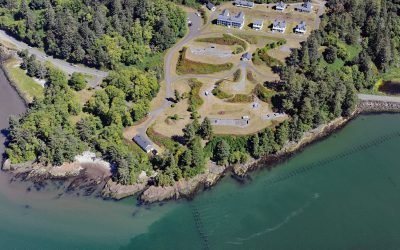
Fort Columbia, Chinook Point
Fort Columbia, a historic military facility situated on Chinook Point, defended the entrance to the Columbia River from 1896 to 1947 and is now a state park, about 7 miles (11 km) southeast of Ilwaco and 6 miles (10 km) northwest of Astoria, Oregon.
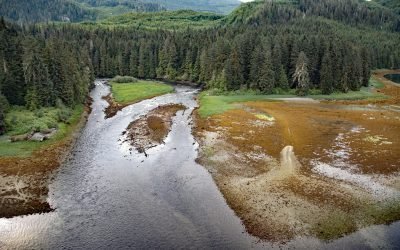
Crab River, Devastation Channel
Crab River flows into Devastation Channel near the entrance to Alan Reach of Gardner Canal, about 81 miles (130km) southeast of Prince Rupert and 28 miles (45km) south-southwest of Kitamaat, British Columbia.
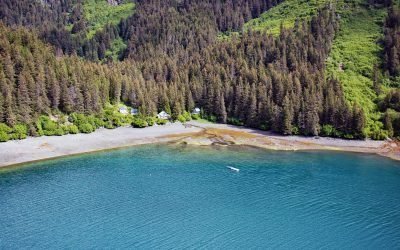
San Juan Cove, Tutka Bay
San Juan Cove is a small embayment on the north shore of Tutka Bay, a deglaciated fjord on the southern shore of Kachemak Bay in the Kenai Mountains in Kachemak Bay State Park, about 13 miles (21 km) south-southeast of Homer and 11 miles (18 km) east-northeast of Seldovia, Alaska.
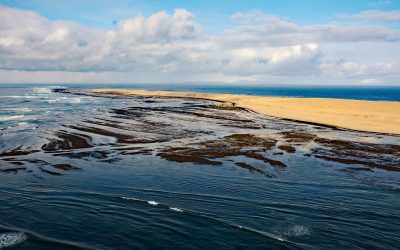
Samalga, Fox Islands
Samalga Island is 4 miles (6 km) long and 0.5 miles (0.8 km) wide located between Umnak Island to the east and the Islands of Four Mountains to the west, approximately 317 miles (510 km) east-northeast of Adak and 18 miles (29 km) southwest of Nikolski, Alaska.
About the background graphic
This ‘warming stripe’ graphic is a visual representation of the change in global temperature from 1850 (top) to 2019 (bottom). Each stripe represents the average global temperature for one year. The average temperature from 1971-2000 is set as the boundary between blue and red. The colour scale goes from -0.7°C to +0.7°C. The data are from the UK Met Office HadCRUT4.6 dataset.
Click here for more information about the #warmingstripes.