
Historical Sites
Recent Articles
More Articles
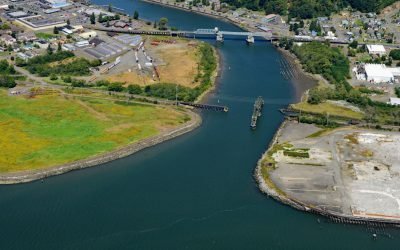
Hoquiam River, Grays Harbor
Hoquiam River drains a watershed of 62,720 acres (25,382 ha) with three principal tributaries that merge into a single channel that trends generally south for 2.5 miles (4 km) to the confluence with the Chehalis River at the head of Grays Harbor between the communities of Hoquiam to the west and Aberdeen to the east, about 47 miles (76 km) west of Olympia and 12 miles (19 km) northeast of Westport, Washington.
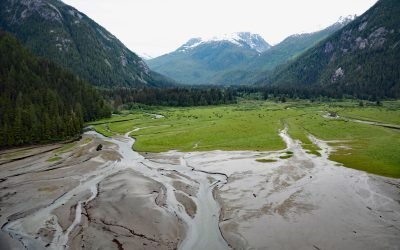
Kowesas River, Chief Mathews Bay
Kowesas River flows generally north for 22 miles (35 km), draining a watershed of 101,807 acres (41,200 ha) in the Coast Mountains before emptying into the head of Chief Mathews Bay, about 112 miles (180 km) southeast of Prince Rupert and 17 miles (27 km) south-southwest of Kemano, British Columbia.
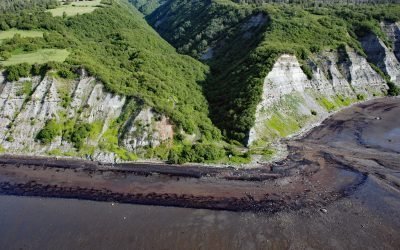
McNeil Canyon, Kachemak Bay
McNeil Canyon is on the Kenai Peninsula and the northern shore of Kachemak Bay and trends south for about 2 miles (3.2 km) following the lower course of McNeil Creek, about 57 miles (92 km) south of Kenai and 12 miles (19 km) northeast of Homer, Alaska.
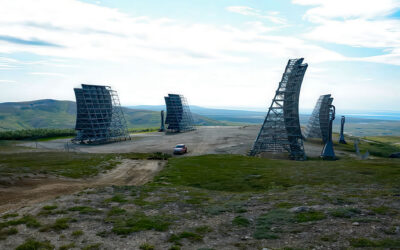
White Alice, Anvil Mountain
White Alice is a historical communication station situated on Anvil Mountain at an elevation of 1,134 feet (345 m) on the Seward Peninsula, about 180 miles (290 km) southwest of Kotzebue and 5 miles (6.5 km) north-northeast of Nome, Alaska.
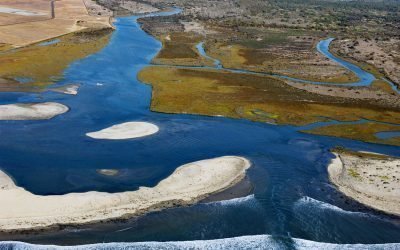
Tijuana River, Imperial Beach
Tijuana River drains a 1.1‑million‑acre (450,000 ha) watershed that originates in the Sierra de Juárez in northern Baja California and flows west‑northwest for 120 miles to the Pacific at the southern edge of Imperial Beach, about 11 miles south of San Diego and 5 miles northwest of Tijuana, Mexico.
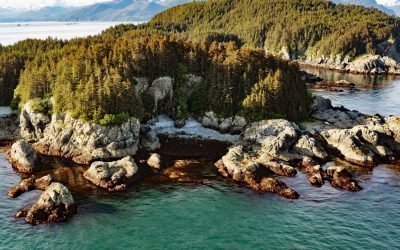
George Islands, Cross Sound
George Island, the largest of the George Islands, lies at the entrance to Port Althorp between the Inian and Althorp Peninsulas on northern Chichagof Island and on the southern coast of Cross Sound, approximately 28 miles (45 km) north-northwest of Sitka and 28 miles (45 km) southwest of Gustavus, Alaska.
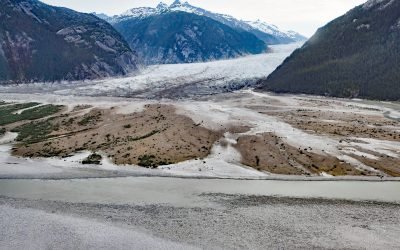
Baird Glacier, Thomas Bay
Baird Glacier starts in the Stikine Icefield in the Boundary Ranges of the Coast Mountains near the Alaska-British Columbia border, and flows generally southwest for 24 miles (39 km) to its terminus at an outwash plain 2 miles (3.2 km) north of the head of Thomas Bay, about 100 miles (162 km) southeast of Juneau and 22 miles (35 km) north-northeast of Petersburg, Alaska.
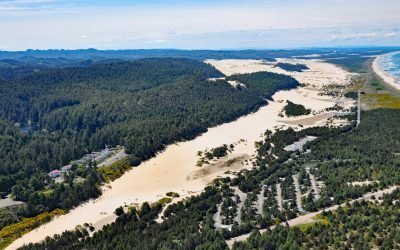
Umpqua River, Winchester Bay
Umpqua River flows generally west-northwest for 111 miles (179 km), draining a watershed of 2.4 million acres (1 million ha), from the Cascade Mountains through the Coast Range to Winchester Bay in the Oregon Dunes, about 20 miles (32 km) north of Coos Bay and 5.5 miles (9 km) southwest of Reedsport, Oregon.
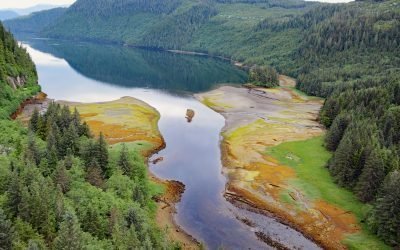
Triumph Bay, Gardner Canal
Triumph Bay is a long narrow embayment located on the south side of Alan Reach in Gardner Canal, British Columbia.
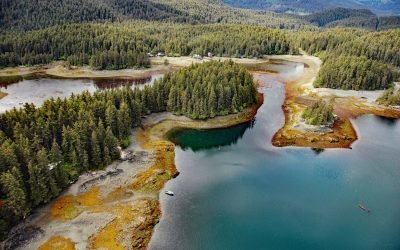
Little Tutka Bay, Kachemak Bay
Little Tutka Bay, a tidal lagoon on the south side of Kachemak Bay and the southern entrance to Tutka Bay, lies about 12 miles (19 km) south of Homer and 7 miles (11 km) east-northeast of Seldovia, Alaska.
About the background graphic
This ‘warming stripe’ graphic is a visual representation of the change in global temperature from 1850 (top) to 2019 (bottom). Each stripe represents the average global temperature for one year. The average temperature from 1971-2000 is set as the boundary between blue and red. The colour scale goes from -0.7°C to +0.7°C. The data are from the UK Met Office HadCRUT4.6 dataset.
Click here for more information about the #warmingstripes.