
Historical Sites
Recent Articles
More Articles
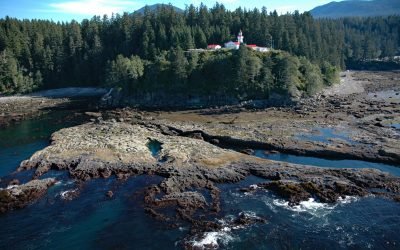
Carmanah Point, Pacific Rim National Park Reserve
Carmanah Point is the site of a historic light station in Pacific Rim National Park Reserve on the southwest coast of Vancouver Island that marks the entrance to the Strait of Juan de Fuca, about 65 miles (105 km) west-northwest of Victoria and 17 miles (27 km) northwest of Port Renfrew, British Columbia.
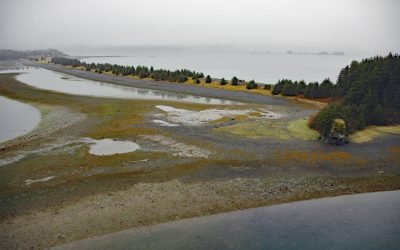
Nuchek, Constantine Harbor
Nuchek is the site of a historical village and Russian trading post on Constantine Harbor at Port Etches on Hinchinbrook Island in Prince William Sound, about 56 miles (90 km) south-southwest of Valdez and 35 miles (56 km) southwest of Cordova, Alaska.
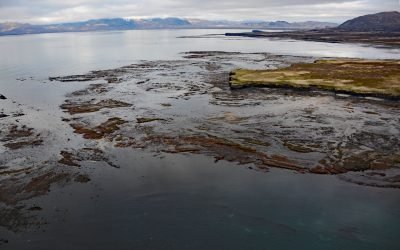
Aniakchak Bay, Aniakchak National Monument and Preserve
Aniakchak Bay is on the Pacific coast of Aniakchak National Monument and Preserve that surrounds Mount Aniakchak, a caldera in the Aleutian Range, about 200 miles (323 km) southwest of Kodiak and 50 miles (81 km) northeast of Chignik, Alaska.
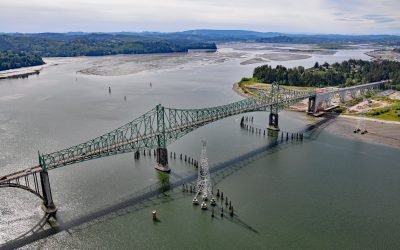
North Bend, Coos Bay
North Bend is one of several communities on Coos Bay, an estuary on the southern Oregon coast, about 22 miles (35 km) south of Reedsport and 3 miles (4.8 km) north of the city of Coos Bay, Oregon.
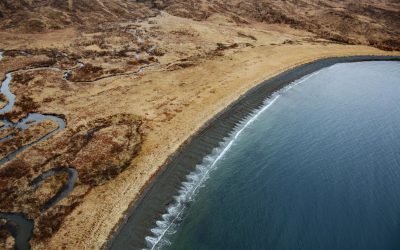
Ugadaga Bay, Unalaska Island
Ugadaga Bay is part of Beaver Inlet, one of the large embayments nearly bisecting Unalaska Island in the Eastern Aleutians, about 141 miles southwest of False Pass and 5.5 miles (9 km) southeast of Dutch Harbor, Alaska.
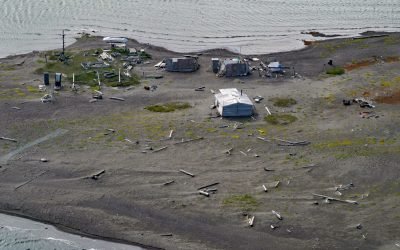
Griffin Point Fish Camp, Beaufort Sea
Griffin Point, also called Uqsruqtalik in the Iñupiat language, is the site of a traditional fish camp on the Beaufort Sea in the Arctic National Wildlife Refuge, about 240 miles (387 km) west-northwest of Tuktoyuktuk and 15 miles (24 km) southeast of Kaktovik, Alaska.
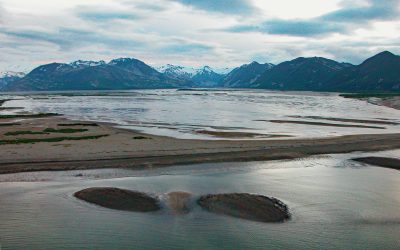
Katmai Bay, Katmai National Park and Preserve
Katmai Bay is about 9 miles (14.5 km) across, located at the mouth of the Katmai River on the Shelikof Strait coast of the Alaska Peninsula in Katmai National Park and Preserve, about 93 miles (150 km) west-northwest of Kodiak and 77 miles (124 km) southeast of King Salmon, Alaska.
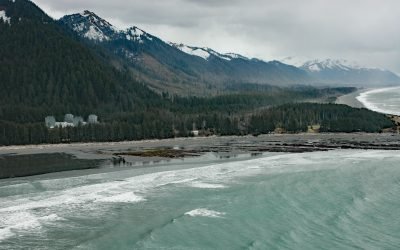
White Alice, Cape Yakataga
Cape Yakataga is a point of land on the Gulf of Alaska and the site of a historical White Alice station, about 100 miles (161 km) northwest of Yakutat and 2 miles (3.2 km) southeast of Yakataga, Alaska.
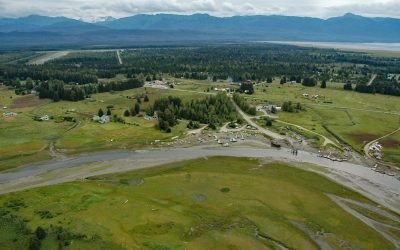
Gustavus, Icy Strait
Gustavus is a community on the north shore of Icy Strait, at the mouth of the Salmon River and across from Pleasant Island, about 48 miles (77 km) west-northwest of Juneau, and 28 miles (45 km) northeast of Elfin Cove, Alaska.
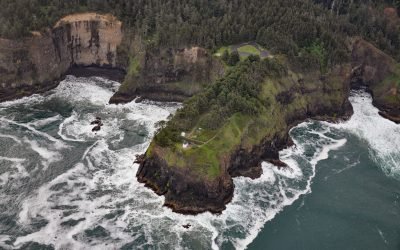
Cape Meares Lighthouse, Cape Meares
Cape Meares is the site of a historic lighthouse on a prominent headland that forms a high steep bluff on the south end of Tillamook Bay, about 48 miles (77 km) south of Astoria and 7 miles (11 km) west-northwest of Tillamook, Oregon.
About the background graphic
This ‘warming stripe’ graphic is a visual representation of the change in global temperature from 1850 (top) to 2019 (bottom). Each stripe represents the average global temperature for one year. The average temperature from 1971-2000 is set as the boundary between blue and red. The colour scale goes from -0.7°C to +0.7°C. The data are from the UK Met Office HadCRUT4.6 dataset.
Click here for more information about the #warmingstripes.