
Rivers
Recent Articles
More Articles
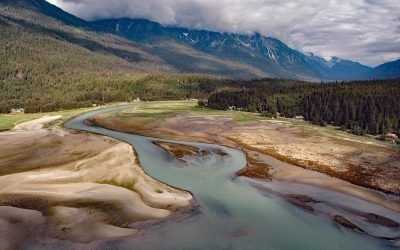
Chilkoot, Lutak Inlet
Chilkoot is a historical Tlingit village located on the Chilkoot River between Lutak Inlet to the south and Chilkoot Lake to the north, about 83 miles (134 km) north-northwest of Juneau and 12 miles (19 km) southwest of Skagway, Alaska.
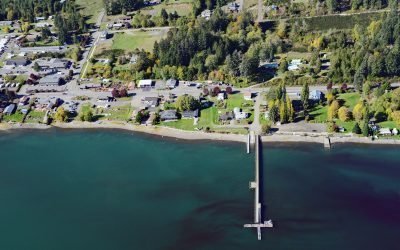
Allyn, Case Inlet
Allyn is a community at the mouth of Sherwood Creek on the western shore of Case Inlet in the North Bay region of South Puget Sound, about 21 miles (34 km) northwest of Tacoma and 17 miles (27 km) northeast of Shelton, Washington.
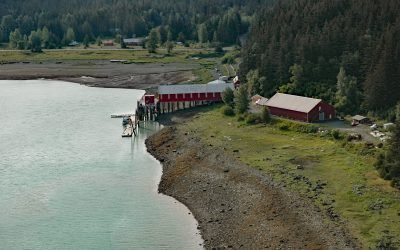
Letnikof Cove, Chilkat Inlet
Letnikof Cove is a small embayment about 0.5 miles (0.8 km) across on the eastern shore of Chilkat Inlet, approximately 70 miles (113 km) north-northwest of Juneau and 5 miles (8 km) south-southeast of Haines, Alaska.
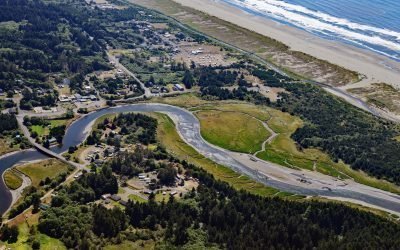
Copalis River, Copalis Beach
The Copalis River flows southwest for 22 miles (35 km) to the community of Copalis Beach, then another 2 miles (3.2 km) to the Pacific Ocean at Griffith-Priday State Park, about 21 miles (34 km) northwest of Hoquiam and 5 miles (8 km) south of Pacific Beach, Washington.
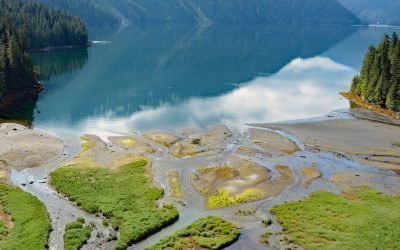
Foch Lagoon, Foch-Gilttoyees Provincial Park
Foch Lagoon is about 1 mile (1.6 km) wide and extends for 5 miles (8 km) northwest from the western shore of Douglas Channel in Foch-Gilttoyees Provincial Park and Protected Area, about 60 miles (97 km) southeast of Prince Rupert and 25 miles (40 km) southwest of Kitimat, British Columbia.
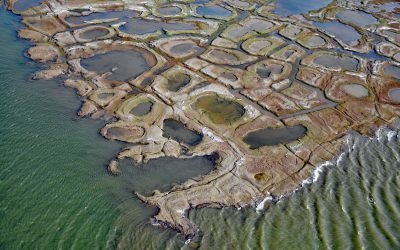
Fish Creek, Harrison Bay
Fish Creek flows generally northeast for approximately 110 miles (177 km) to Harrison Bay at the western edge of the Colville River Delta, about 141 miles (230 km) southeast of Utqiaġvik and 12 miles (19 km) north-northwest of Nuiqsut, Alaska.
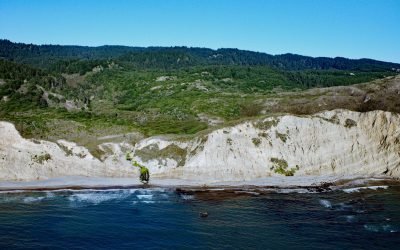
Alamere Falls, Point Reyes National Seashore
Alamere Falls is located in the Phillip Burton Wilderness of Point Reyes National Seashore, about 6 miles (10 km) south of Olema and 6.4 miles (10.3 km) northwest of Bolinas, California.
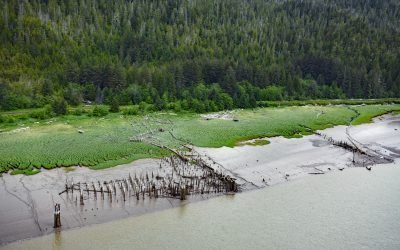
Haysport, Skeena River
Haysport is the site of a historical community and salmon cannery on the north shore of the Skeena River adjacent to the Grand Trunk Railroad, about 61 miles (100 km) southwest of Terrace and 16 miles (26 km) southeast of Prince Rupert, British Columbia.
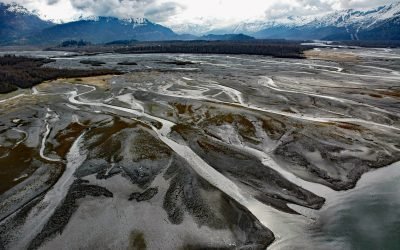
Old Valdez Townsite, Valdez Glacier Stream
Old Valdez was the original townsite of Valdez built on the outwash plain formed by Valdez Glacier which is drained by Valdez Glacier Stream that flows generally south-southeast for 4.5 miles (7 km) to Port Valdez in Prince William Sound, about 43 miles (69 km) north-northwest of Cordova and 3.7 miles (6 km) southeast of Valdez, Alaska.
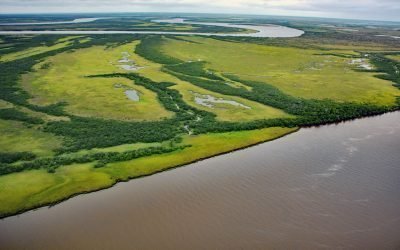
Eek River, Kuskokwim Delta
Eek River drains a watershed of 408,959 acres (165,500 ha) and flows generally west-northwest for 108 miles (174 km) to the Kuskokwim Delta, about 40 miles (64 km) south-southwest of Bethel and 32 miles (51 km) north of Quinhagak, Alaska.
About the background graphic
This ‘warming stripe’ graphic is a visual representation of the change in global temperature from 1850 (top) to 2019 (bottom). Each stripe represents the average global temperature for one year. The average temperature from 1971-2000 is set as the boundary between blue and red. The colour scale goes from -0.7°C to +0.7°C. The data are from the UK Met Office HadCRUT4.6 dataset.
Click here for more information about the #warmingstripes.