
Glaciers
Recent Articles
More Articles
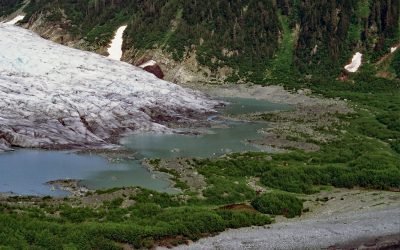
Bainbridge Glacier, Port Bainbridge
Bainbridge Glacier originates on Pinnacle Mountain at the edge of the Sargent Icefield on the Kenai Peninsula, and flows east for 10 miles (16 km) to Port Bainbridge, about 47 miles (76 km) south-southeast of Whittier and 36 miles (58 km) east of Seward, Alaska.
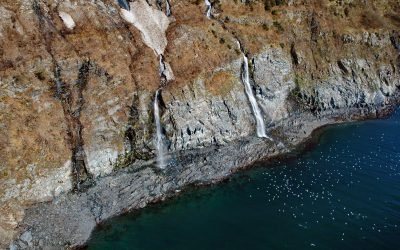
Rookery Falls, Passage Canal
Rookery Falls is on the northern shore of Passage Canal in Prince William Sound, about 50 miles (80 km) southeast of Anchorage and 1.7 miles (1.9 km) north-northeast of Whittier, Alaska.
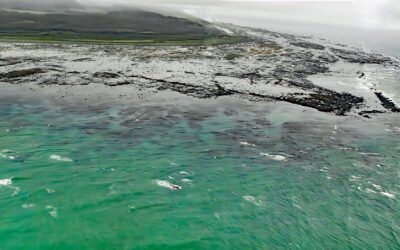
Cape Suckling, Suckling Hills
Cape Suckling is an area of wave eroded rocky reefs backed by dunes, and farther inland lie the Suckling Hills and the terminus of the Bering Glacier, about 150 miles (241 km) west-northwest of Yakutat and 73 miles (117 km) southeast of Cordova, Alaska.
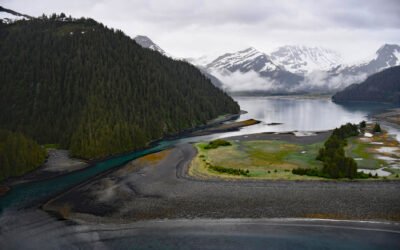
James Lagoon, McCarty Fjord
James Lagoon is a drowned cirque basin about 0.5 miles (0.8 km) wide, partially enclosed by the remains of a terminal moraine, on the western shore of McCarty Fjord in Kenai Fjords National Park, about 51 miles (82 km) southwest of Seward and 40 miles (64 km) east-southeast of Homer, Alaska.
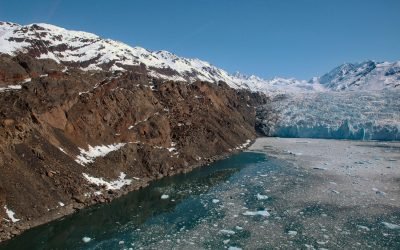
Yale Glacier, College Fjord
Yale Glacier is a massive tidewater glacier in College Fjord of Prince William Sound that starts at an elevation of 9,270 feet (2,826 m) between Mount Cardozo and Mount Einstein in the Chugach Mountains and flows generally southwest for 17 miles (27 km) to Yale Arm, about 48 miles (77 km) northeast of Whittier and 43 miles (69 km) west-northwest of Valdez, Alaska.
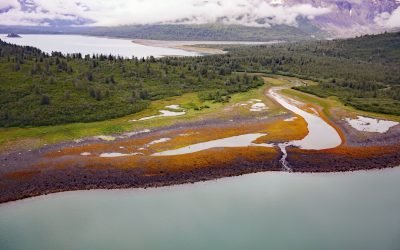
Scidmore Bay, Gilbert Peninsula
Scidmore Bay, enclosed by the Gilbert Peninsula to the east and the Fairweather Mountains to the west, lies in Glacier Bay National Park and Preserve, about 119 miles (192 km) southeast of Yakutat and 43 miles (69 km) northwest of Gustavus, Alaska.
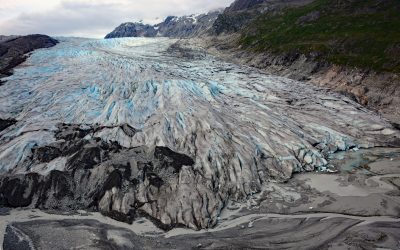
Reid Glacier, Glacier Bay National Park and Preserve
Reid Glacier flows north for 11 miles from the Brady Icefield to Reid Inlet in Glacier Bay National Park and Preserve, about 113 miles (182 km) southeast of Yakutat and 50 miles northwest of Gustavus, Alaska.
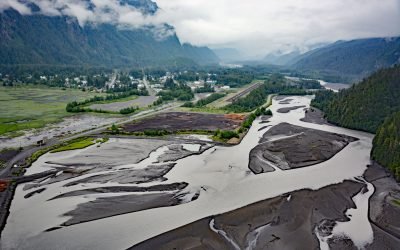
Stewart, Bear River
Stewart is a Canadian border community at the mouth of the Bear River and the head of Portland Canal, connected to Hyder, Alaska by 2 miles (3.2 km) of road, about 99 miles (159 km) east-southeast of Wrangell and 114 miles (183 km) north of Prince Rupert, British Columbia.
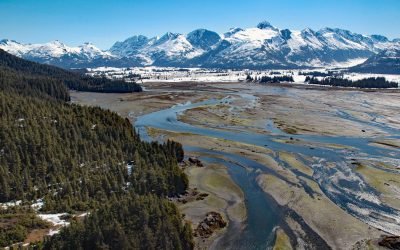
Coghill River, Dartmouth Glacier
The Coghill River in Chugach National Forest flows southwest for 5 miles (8 km) from the terminus of Dartmouth Glacier to Coghill Lake, which is 4.7 miles (7.5 km) long, and then runs west-southwest for 3 miles (4.8 km) to College Fjord near Coghill Point, about 54 miles (87 km) west of Valdez and 32 miles (51 km) northeast of Whittier, Alaska.
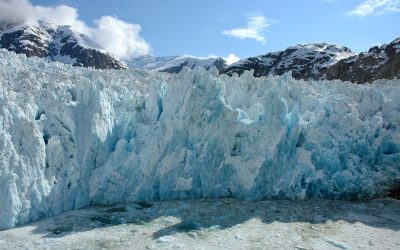
Le Conte Glacier, Frederick Sound
Le Conte Glacier starts from the Stikine Icefield in the Coast Mountains of British Columbia, at an elevation of about 8,500 feet (2,591 m) between Devils Thumb and Mount Gilroy, and flows generally south for 22 miles (35 km) to Southeast Alaska at the head of Le Conte Bay in Frederick Sound, about 25 miles (40 km) north of Wrangell and 22 miles (35 km) east of Petersburg, Alaska.
About the background graphic
This ‘warming stripe’ graphic is a visual representation of the change in global temperature from 1850 (top) to 2019 (bottom). Each stripe represents the average global temperature for one year. The average temperature from 1971-2000 is set as the boundary between blue and red. The colour scale goes from -0.7°C to +0.7°C. The data are from the UK Met Office HadCRUT4.6 dataset.
Click here for more information about the #warmingstripes.