
Lighthouses
Recent Articles
More Articles
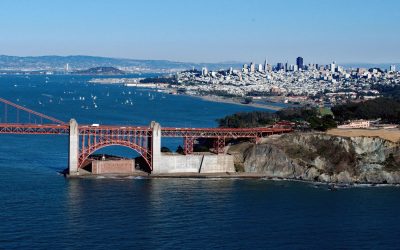
Fort Point, Golden Gate
Fort Point is a promontory where a historic masonry fortification, and later the southern approach of the Golden Gate Bridge, were constructed on the south side of the Golden Gate at the entrance to San Francisco Bay, about 4 miles (6 km) west-northwest of downtown San Francisco and 3 miles (5 km) south of Sausalito, California.
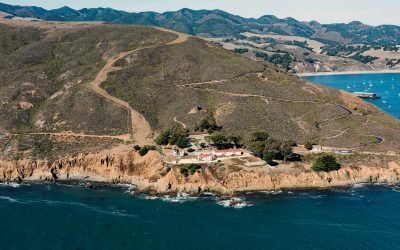
Point San Luis Light Station, Avila Beach
Point San Luis is the site of a historic light station on a peninsula formed by San Luis Hill, a headland with an elevation of 708 feet (216 m), that provides a sheltered harbor for Port San Luis and the community of Avila Beach on San Luis Obispo Bay, about 118 miles (190 km) south-southeast of Monterey and 7 miles (11 km) west-northwest of Pismo Beach, California.
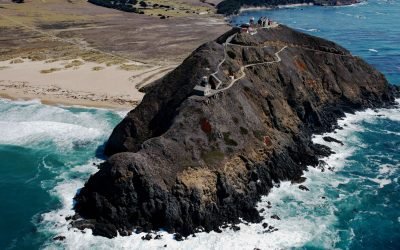
Point Sur Light Station, Big Sur
Point Sur Light Station is situated on a prominent volcanic rock just offshore from the Big Sur coast, and connected to the mainland by a sandy tombolo, about 60 miles (97 km) northwest of San Simeon and 20 miles (32 km) south of Monterey, California.
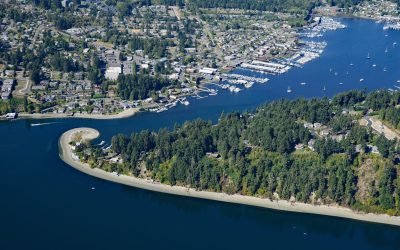
Gig Harbor, Puget Sound
Gig Harbor is an embayment and community on the western shore of Puget Sound across from Point Defiance at the confluence of Tacoma Narrows, Dalco Passage, and Colvos Passage, about 21 miles (34 km) south-southwest of Seattle and 8.5 miles (14 km) northwest of Tacoma, Washington.
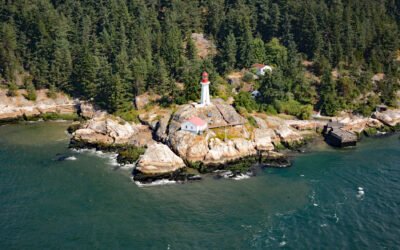
Point Atkinson Lighthouse, Burrard Inlet
Lighthouse Park was historically called Point Atkinson, a headland that together with Point Grey to the south, defines the entrance to Burrard Inlet, a fjord incising the lower mainland of British Columbia, about 33 miles (53 km) northeast of Nanaimo and 8 miles (13 km) northwest of downtown Vancouver, British Columbia.
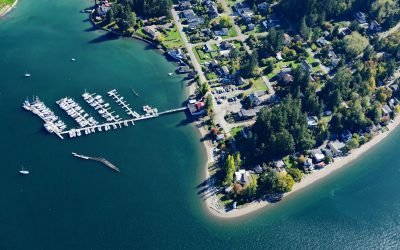
Dofflemyer Point, Boston Harbor
Dofflemyer Point is located in the community of Boston Harbor, on the eastern shore of South Puget Sound, and defines the entrance to Budd Inlet, about 23 miles (37 km) west-southwest of Tacoma and 7 miles (11 km) north of Olympia, Washington.
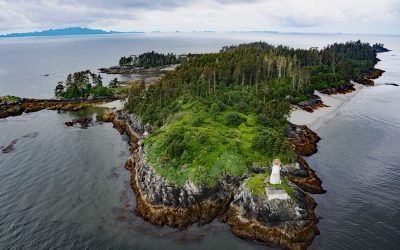
Lucy Islands, Chatham Sound
Lucy Islands is a small group of islets and reefs situated 26 miles (42 km) south of the Alaska border at the intersection of Brown Passage and Chatham Sound, about 83 miles (134 km) southeast of Ketchikan and 12 miles (19 km) west of Prince Rupert, British Columbia.
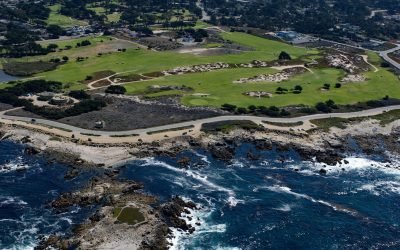
Point Pinos, Pacific Grove
Point Pinos is in the community of Pacific Grove at the northern end of the Monterey Peninsula and is the location of the oldest continuously operated lighthouse on the U.S. west coast, about 24 miles (39 km) south-southeast of Santa Cruz and 3 miles (4.8 km) northwest of Monterey, California.
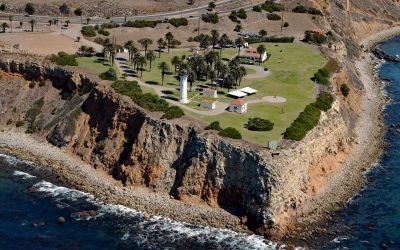
Point Vicente, Palos Verdes Peninsula
Point Vicente is on the Palos Verdes Peninsula between Long Point to the southeast and Resort Point to the northwest, about 20 miles (32 km) south-southeast of Santa Monica and 12.5 miles (20 km) west of Long Beach, California.
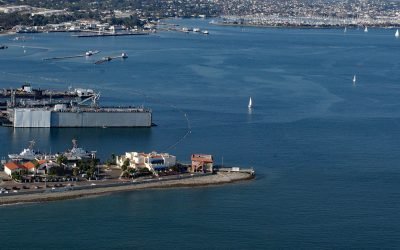
Ballast Point, San Diego Bay
Ballast Point is a peninsula that extends northwest for 0.44 miles (0.7 km) from the Point Loma Peninsula at the mouth of San Diego Bay, about 11 miles (18 km) south of La Jolla and 4 miles (6 km) southwest of downtown San Diego, California.
About the background graphic
This ‘warming stripe’ graphic is a visual representation of the change in global temperature from 1850 (top) to 2019 (bottom). Each stripe represents the average global temperature for one year. The average temperature from 1971-2000 is set as the boundary between blue and red. The colour scale goes from -0.7°C to +0.7°C. The data are from the UK Met Office HadCRUT4.6 dataset.
Click here for more information about the #warmingstripes.