Canneries
Recent Articles
More Articles

Todd Cannery, Peril Strait
Todd is an abandoned cannery and a historical settlement on Lindenberg Harbor in Peril Strait, on the southern coast of Chichagof Island, 9 miles (15 km) west of Chatham Strait and 32 air miles (52 km) north-northeast of Sitka, Alaska.
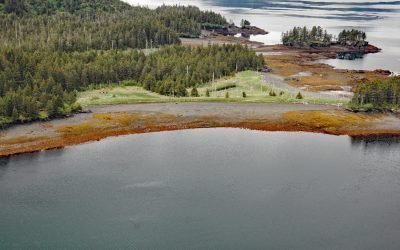
Portlock Cannery, Port Chatham
Portlock is a historical salmon cannery in Port Chatham, an embayment on the southern coast of the Kenai Peninsula, about 102 miles (164 km) north-northeast of Kodiak and 10 miles (16 km) south-southeast of Port Graham, Alaska.

Canadian Fishing Company, Prince Rupert
The Canadian Fishing Company operates fish processing plants on Prince Rupert Harbour at Seal Cove and at George Hills Way, about 89 miles (143 km) southeast of Ketchikan and 72 miles (116 km) west-southwest of Terrace, British Columbia.

Claxton, Telegraph Passage
Claxton is a historical salmon cannery and community at the mouth of Claxton Creek on the eastern shore of Telegraph Passage in the Skeena River estuary, about 66 miles (106 km) southwest of Terrace and 19 miles (31 km) south-southeast of Prince Rupert, British Columbia.

Carlisle Cannery, Skeena River
Carlisle is a historical remote salmon cannery on the east bank at the mouth of the Skeena River, about 66 miles (106 km) southwest of Terrace and 17 miles (27 km) southeast of Prince Rupert, British Columbia.
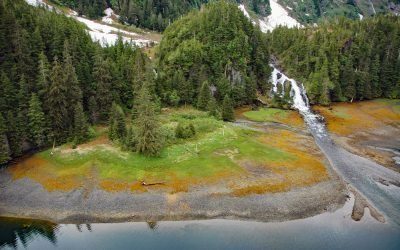
Cliff Falls, Deep Cove
Cliff Falls is the outlet for Cliff Lake, located at the head of Deep Cove, approximately 1.1 miles (1.8 km) west of Patterson Point, about 41 miles (66 km) south-southeast of Sitka, and 17.5 miles (28 km) north-northwest of Port Armstrong, Alaska.

Mush Bay, East Arm Uganik Bay
Mush Bay is a local name for a shallow embayment on the western shore of the East Arm of Uganik Bay on Kodiak Island’s west coast, about 22 miles (35 km) northeast of Larsen Bay and 40 miles (65 km) west-southwest of Kodiak, Alaska.

Humpback Bay, Porcher Island
Humpback Bay is an embayment on the north coast of Porcher Island off Malacca Passage, about 15 miles (24 km) south of Prince Rupert, British Columbia.

Chip Cove Cannery, Moser Bay
Chip Cove is an embayment between Luchek Mountain to the south and Peak 2001 to the north, and the site of a historical salmon cannery on the western shore of Moser Bay near Olga Narrows on the southwestern coast of Kodiak Island, about 83 miles (131 km) southwest of Kodiak and 6 miles (10 km) north of Akhiok, Alaska.

Copper Harbor, Hetta Inlet
Copper Harbor is an embayment on Prince of Wales Island on the eastern shore of Hetta Inlet, near the historical Coppermount mine, about 38 miles (61 km) west-southwest of Ketchikan and 8.6 miles (14 km) east-northeast of Hydaburg, Alaska.
About the background graphic
This ‘warming stripe’ graphic is a visual representation of the change in global temperature from 1850 (top) to 2019 (bottom). Each stripe represents the average global temperature for one year. The average temperature from 1971-2000 is set as the boundary between blue and red. The colour scale goes from -0.7°C to +0.7°C. The data are from the UK Met Office HadCRUT4.6 dataset.
Click here for more information about the #warmingstripes.